
In recent years, the hospitality industry has been undergoing a quiet revolution. Beyond the warm welcomes and luxurious settings, robotics are invisible forces that are enhancing guest experiences and streamlining operations. From artificial intelligence (AI) driven concierge services to autonomous delivery systems, robots are no longer a novelty, they are becoming an integral part of hotels, resorts, and restaurants worldwide.

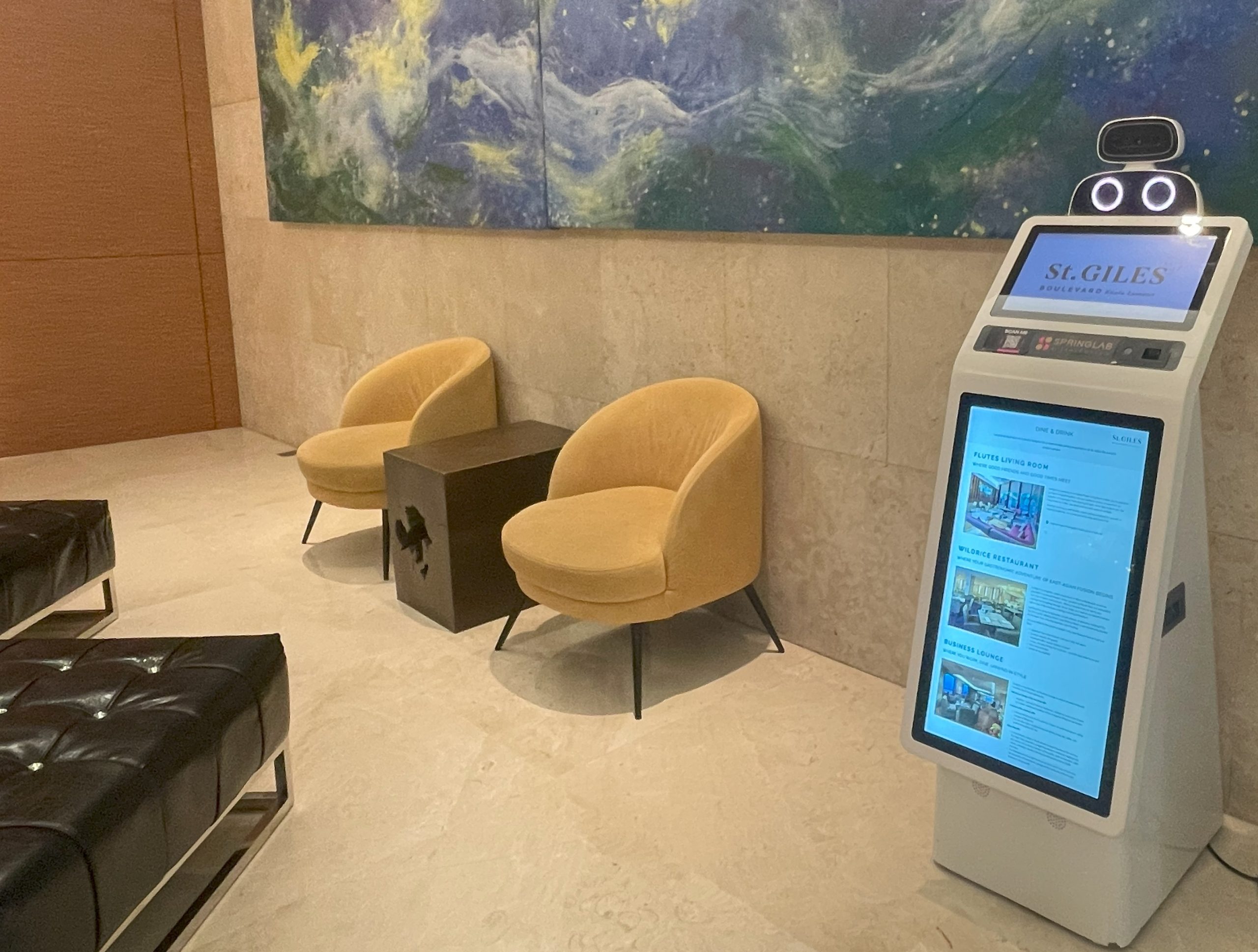
Smart Usher BOT (photo by St. Giles Boulevard)
Enhancing Guest Services
Robotics are redefining what it means to offer exceptional service. In many hotels, delivery robots now bring towels, snacks, and other amenities directly to guest rooms. These machines operate 24 hours by ensuring that requests are fulfilled promptly, without delays caused by human shift changes or staff shortages. In the lobby, AI-powered service robots can greet guests and answer frequently asked questions.
Guests can check the latest information from this robot at the lobby in St. Giles Boulevard
Streamlining Operations
Behind the scenes, robotics play an equally crucial role. Automated cleaning robots maintain spotless floors and public areas, allowing housekeeping teams to focus on more detailed, personalized tasks. In kitchens, robotic arms assist chefs by preparing repetitive dishes, ensuring consistency and reducing preparation times during peak hours. Inventory robots help track stock levels, minimizing waste and ensuring smooth supply chains.
Meeting Safety and Hygiene Standards
Post-pandemic, hygiene and contactless service have become top priorities in hospitality. Robots can limit human-to-human contact while still providing efficient service. For example, UV-light cleaning robots can disinfect large spaces quickly, reducing health risks and meeting heightened cleanliness expectations.
Looking Ahead…
Adopting robotics in hospitality comes with considerations, such as upfront investment costs, integration with existing systems, and staff training. Hotels must also ensure that guests are comfortable interacting with machines, which means balancing technology with a human-friendly design and approach.
While robotics offer undeniable efficiency, the human touch is still matters because they are not a replacement for human hospitality. Instead, they serve as an extension of the team by handling repetitive, labor-intensive, or high-risk tasks so that human staff can focus on creating memorable, emotional connections with guests. The best guest experiences still rely on warmth, empathy, and personalized service, the qualities robots cannot replicate.
The future of hospitality will likely be a hybrid model where humans and robots work side by side. As AI, machine learning, and robotics technology continue to evolve, we can expect even smarter systems that anticipate guest needs before they arise, whether it is a robot preparing a favorite cocktail as soon as a guest walks in or automatically adjusting a room’s climate to individual preferences.
In a conclusion, robotics in hospitality are not about replacing people, they are about empowering them. By handling the behind-the-scenes work efficiently and reliably, robots free human staff to focus on what hospitality does its best which is making guests feel welcome and valued.
Further reading and references:
- St. Giles Boulevard website https://tinyurl.com/yfzkuews
- Hotel Brands that Use Robots https://tinyurl.com/m2ttbn2k

